
 info@imetatech.io
 India
India  Dubai
DubaiPlatform Solution
Custom trading platform development for signal clarity and operational control.
iMeta is a trading platform development company that connects market data, scanners, alerts, account views and operator workflows in focused software products.

Who It Is For
Trading products for teams that need faster market understanding.
The platform scope can support a new market product or a focused modernization of research, signal and account workflows.
- Market-intelligence product teams
Organize scanners, alerts and visual market context into a coherent subscription or internal product.
- Brokerage and trading-platform operators
Improve customer and operator journeys around market views, accounts and supported execution connections.
- Research and trading organizations
Replace fragmented tools with shared watchlists, signals and review workflows shaped for the team.
Business Problem
The operating challenge this solution addresses.
Market products lose value when data, research, alerts and action paths are fragmented or difficult to interpret under time pressure.
Integration Capabilities
Bring market data and action paths into one workspace.
Provider contracts, data rights and execution permissions are confirmed by the operator before each external connection is implemented.
- Market-data providers
Normalize the feeds, symbols, timestamps and update patterns required by dashboards and scanners.
- Broker or execution APIs
Connect supported order and account workflows where the approved product scope includes execution.
- Alerts and team tools
Route relevant signals into in-product, email or collaboration channels with controlled preferences.
Security & Operations
Engineer for data quality and time-sensitive use.
Trading software needs explicit handling for stale data, provider failures and user permissions; it cannot rely on the interface alone.
- Freshness and failure states
Show when market inputs are delayed, incomplete or unavailable instead of presenting uncertain data as current.
- Role-based operations
Separate trader, analyst and administrator actions according to the product’s operating model.
- Performance visibility
Monitor feed processing, alerts and important user journeys so bottlenecks can be investigated.
Solution Architecture
Connected components, designed as one platform.
The exact architecture changes with scale and integrations, but these are the core operating layers.
- 01
Market intelligence workspace
A production-ready product layer designed around clear user journeys and sustainable operations.
- 02
Scanner and alert engine
A production-ready product layer designed around clear user journeys and sustainable operations.
- 03
Portfolio and account views
A production-ready product layer designed around clear user journeys and sustainable operations.
- 04
Operator and risk controls
A production-ready product layer designed around clear user journeys and sustainable operations.
Delivery Capabilities
What iMeta can deliver within the solution.
Scope is selected around the existing product, operational risk and release objectives.
- Market workflow discovery
Clarify the opportunity, user needs, constraints and success measures before delivery begins.
- Dashboard and scanner UX
Translate product requirements into intuitive journeys, states and interaction patterns.
- Alert orchestration
Turn this workstream into a clear, reviewable part of the product delivery plan.
- Market-data integration planning
Plan dependable collection, movement and use of data across the product lifecycle.
- Account and administration flows
Design clear paths for users, transactions and operational teams across the product.
- Performance and monitoring support
Make product health, errors and operational signals visible after release.
Technical consultation
Validate the architecture before committing to the build.
Review product scope, integrations, delivery risks and the practical route to launch with iMeta's engineering team.
Development Process
A trading software development path grounded in market workflows.
The build sequence starts with decisions users need to make, then defines the data and product layers required to support them.
- 01Workflow and user discovery
Identify market universes, research routines, account roles and the decisions the platform must support.
- 02Data and system design
Define feed normalization, storage, alert and interface boundaries around expected update patterns.
- 03Dashboard prototyping
Validate dense market views, filters and states before scaling engineering effort.
- 04Incremental platform build
Develop data services, scanners, alerts and workspaces through reviewable releases.
- 05Resilience and performance checks
Exercise stale feeds, permission boundaries, notification failures and high-use workflows.
- 06Production rollout
Launch with operational monitoring and a prioritized path for additional market tools.
Product Evidence
Related work from real platform delivery.
Nine15 Labs is the primary trading proof: a signal-intelligence workspace for scanners, alert orchestration and market-flow visibility. Problys adds adjacent prediction-intelligence evidence.
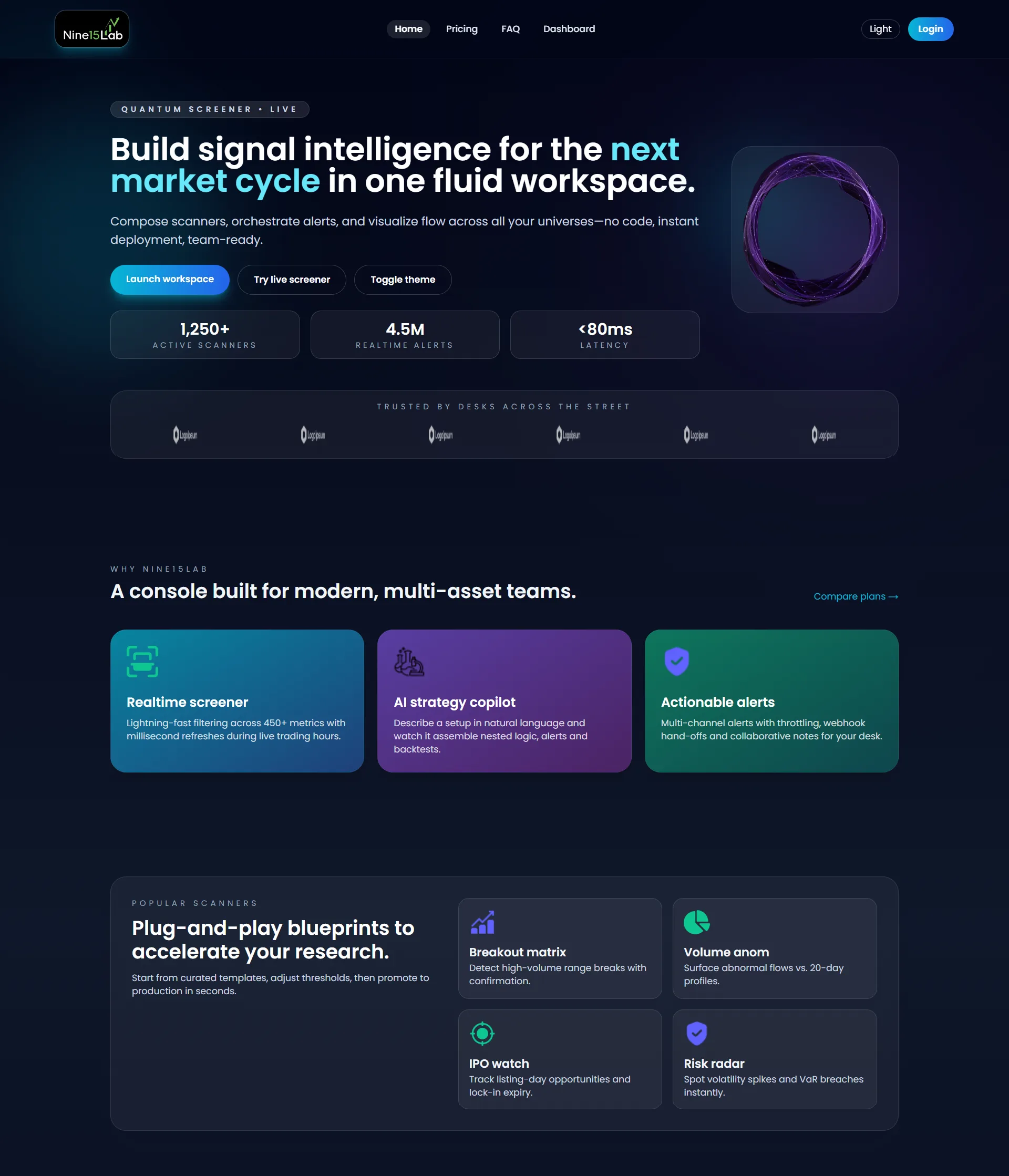
Trading and capital marketsNine15 Labs
View projectA trading workspace that organizes scanner, alert and market-flow visibility for active teams.
Read case study ↗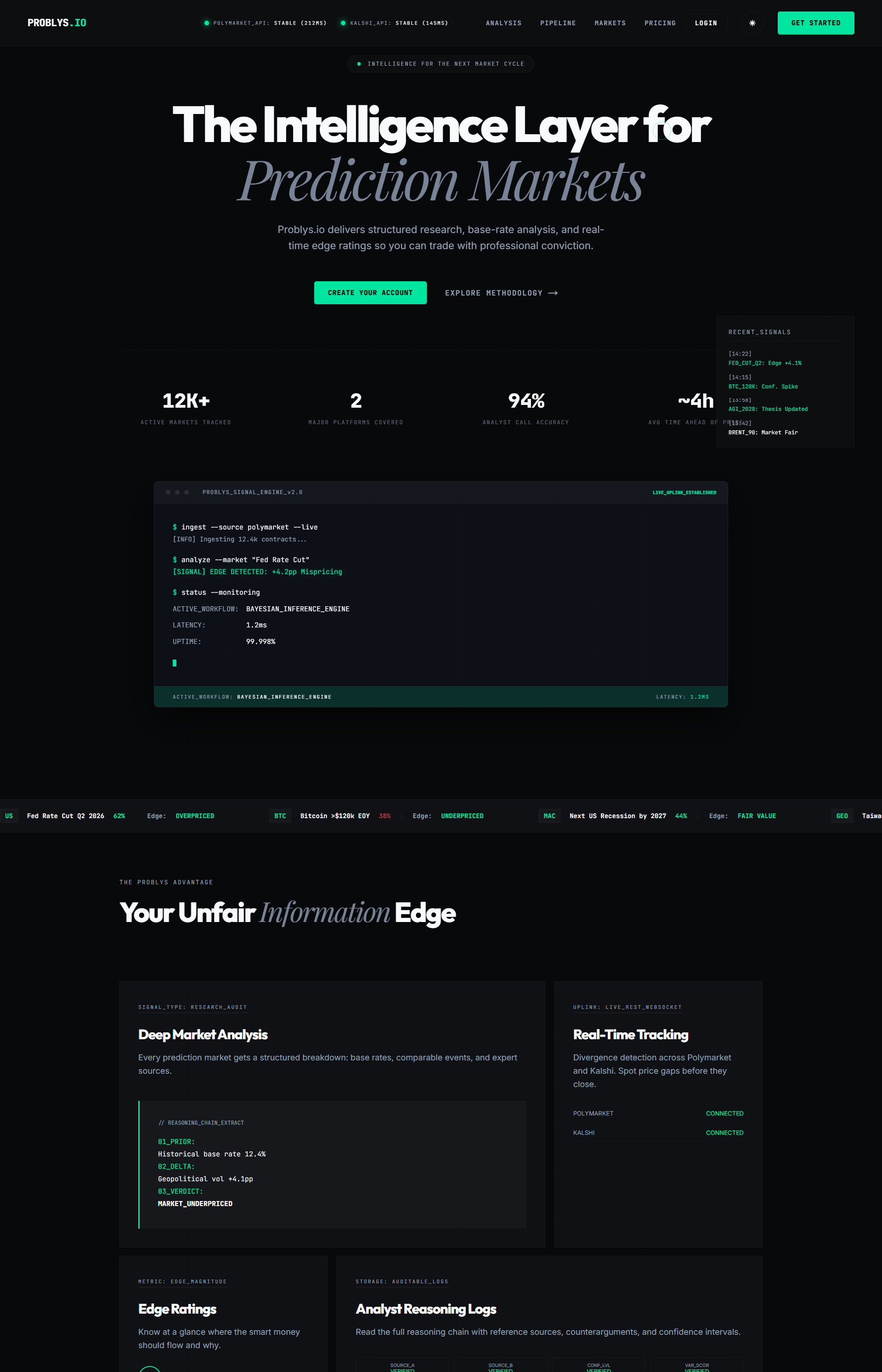
AI and trading intelligenceProblys
View projectA focused intelligence layer for prediction-market research and trader decision support.
Read case study ↗Related Services
Engineering capabilities behind this solution.
FAQs
Trading platform development questions
Can iMeta develop both research tools and execution workflows?
Yes, when supported provider APIs and permissions are available. The architecture keeps market intelligence, account and execution responsibilities clearly separated.
Can you modernize an existing trading product?
Yes. iMeta can review current market-data flows, interfaces and operational constraints before proposing an incremental modernization plan.
Does iMeta supply or license market data?
No. The operator selects and licenses appropriate providers; iMeta engineers the approved integrations and product workflows.
How do you handle real-time or delayed data?
Update frequency, timestamps, caching and stale-data states are defined from the provider behaviour and the decisions users need to make.
What determines the cost of custom trading platform development?
The main variables are data sources, scanner and alert complexity, account roles, execution scope, performance expectations and existing systems.
Plan the engagement
Ready to define scope, timeline and investment?
Share the project stage and delivery requirements. The iMeta team will review them and respond with the next practical step.