
 info@imetatech.io
 India
India  Dubai
DubaiPlatform Solution
Custom AI agent development for controlled business workflows.
iMeta is an AI agent development company that connects models, business knowledge, tools, approvals and monitoring into production-focused workflows.

Who It Is For
AI agents for teams with repeatable, reviewable work.
The strongest use cases have a defined business task, trusted context, available tools and a clear point where a person should review or intervene.
- Operations and service teams
Assist research, triage, preparation or follow-up while retaining ownership of approvals and exceptions.
- SaaS and digital-product teams
Embed tool-using or knowledge-grounded agent workflows into an existing customer product.
- Enterprise automation programs
Connect internal knowledge and systems through controlled agents instead of isolated chat experiences.
Business Problem
The operating challenge this solution addresses.
An AI agent needs reliable context, permissions, evaluation and recovery paths before it can support production work safely.
Integration Capabilities
Ground agents in the systems they are allowed to use.
The architecture can remain provider-flexible where useful, while permissions and data boundaries are defined for each tool.
- Model providers and routing
Select models and routing rules around task quality, latency, cost and operational constraints.
- Knowledge and retrieval sources
Connect approved documents, databases or search layers with source context retained for review.
- Business tools and APIs
Give agents narrowly scoped actions inside supported CRM, workflow or product systems.
Security & Operations
Control what the agent knows, does and escalates.
Enterprise AI agent development requires evaluation and human ownership beyond a successful model demonstration.
- Permissions and action boundaries
Restrict tools, data and write actions according to the user and workflow.
- Human approval and recovery
Route sensitive or uncertain decisions to people and define what happens when a tool fails.
- Evaluation and observability
Measure representative tasks, review failure patterns and monitor production behaviour over time.
Solution Architecture
Connected components, designed as one platform.
The exact architecture changes with scale and integrations, but these are the core operating layers.
- 01
Agent orchestration
A production-ready product layer designed around clear user journeys and sustainable operations.
- 02
Knowledge and retrieval layer
A production-ready product layer designed around clear user journeys and sustainable operations.
- 03
Tool and API connections
A production-ready product layer designed around clear user journeys and sustainable operations.
- 04
Evaluation and review console
A production-ready product layer designed around clear user journeys and sustainable operations.
Delivery Capabilities
What iMeta can deliver within the solution.
Scope is selected around the existing product, operational risk and release objectives.
- Agent workflow discovery
Clarify the opportunity, user needs, constraints and success measures before delivery begins.
- Model and tool architecture
Shape the components, data flows, integrations and technical decisions needed to scale.
- Retrieval and context design
Turn requirements into coherent product patterns, screens and interaction decisions.
- Approval and escalation logic
Turn this workstream into a clear, reviewable part of the product delivery plan.
- Evaluation workflows
Map each critical action, decision and exception into a usable end-to-end journey.
- Monitoring and iteration
Make product health, errors and operational signals visible after release.
Technical consultation
Validate the architecture before committing to the build.
Review product scope, integrations, delivery risks and the practical route to launch with iMeta's engineering team.
Development Process
How custom AI agent development moves beyond a prototype.
The agent is built around a measurable workflow first, then expanded only when evaluation supports the next level of autonomy.
- 01Use-case and risk discovery
Define the task, users, source systems, expected decisions and actions that need approval.
- 02Context and tool architecture
Design retrieval, memory, APIs, permissions and model routing around the chosen workflow.
- 03Evaluation-ready prototype
Test representative examples and failure cases before integrating broad tool access.
- 04Controlled product integration
Connect the agent to product interfaces and approved systems through reviewable increments.
- 05Safety and reliability review
Exercise permissions, tool errors, unsupported questions and human escalation paths.
- 06Monitored production iteration
Release with evaluation signals and improve the workflow using observed behaviour.
Product Evidence
Related work from real platform delivery.
Problys is the primary approved proof for structured research and decision-support workflows; Nine15 Labs adds evidence for signal and alert-oriented product engineering.
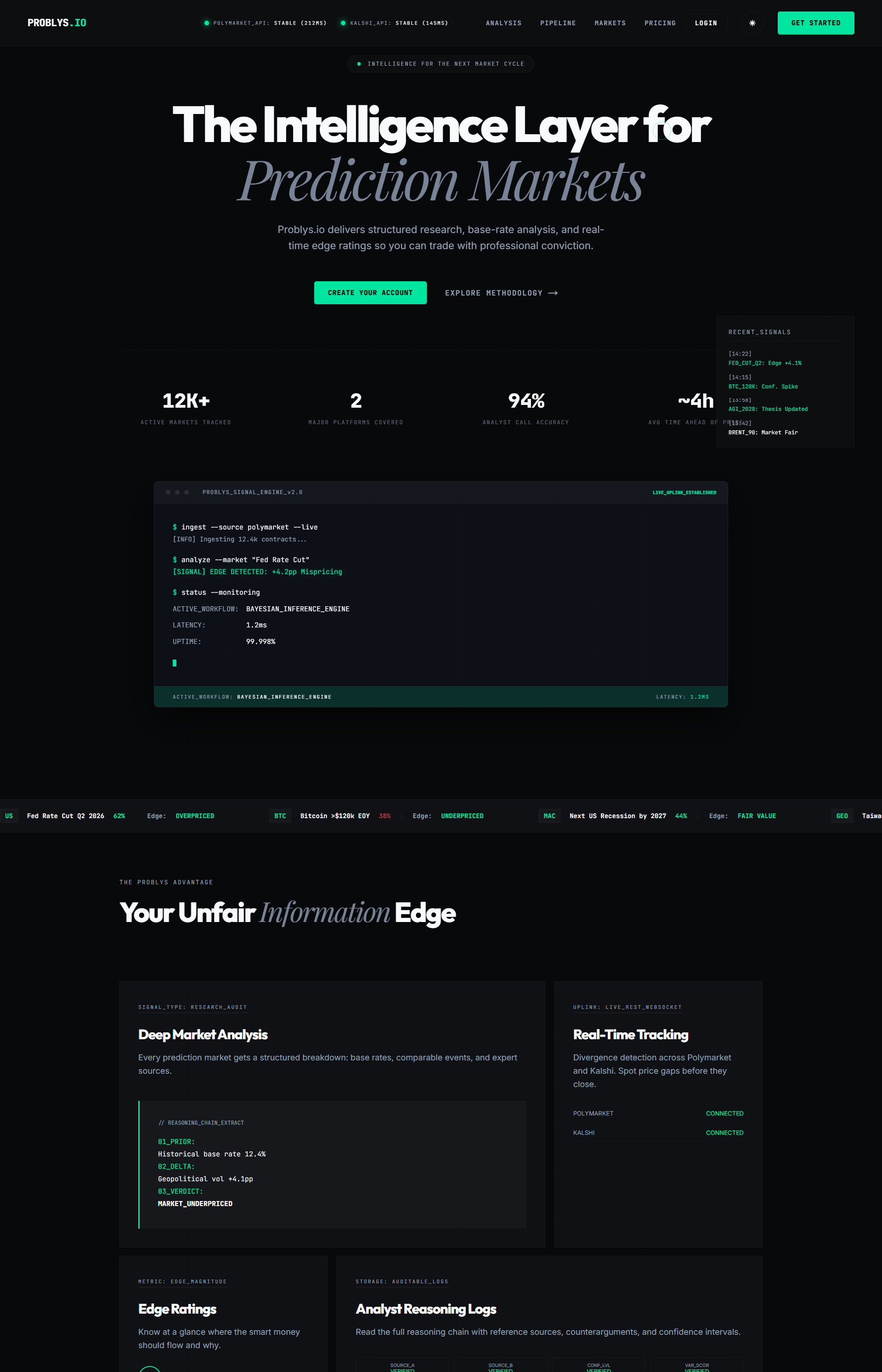
AI and trading intelligenceProblys
View projectA focused intelligence layer for prediction-market research and trader decision support.
Read case study ↗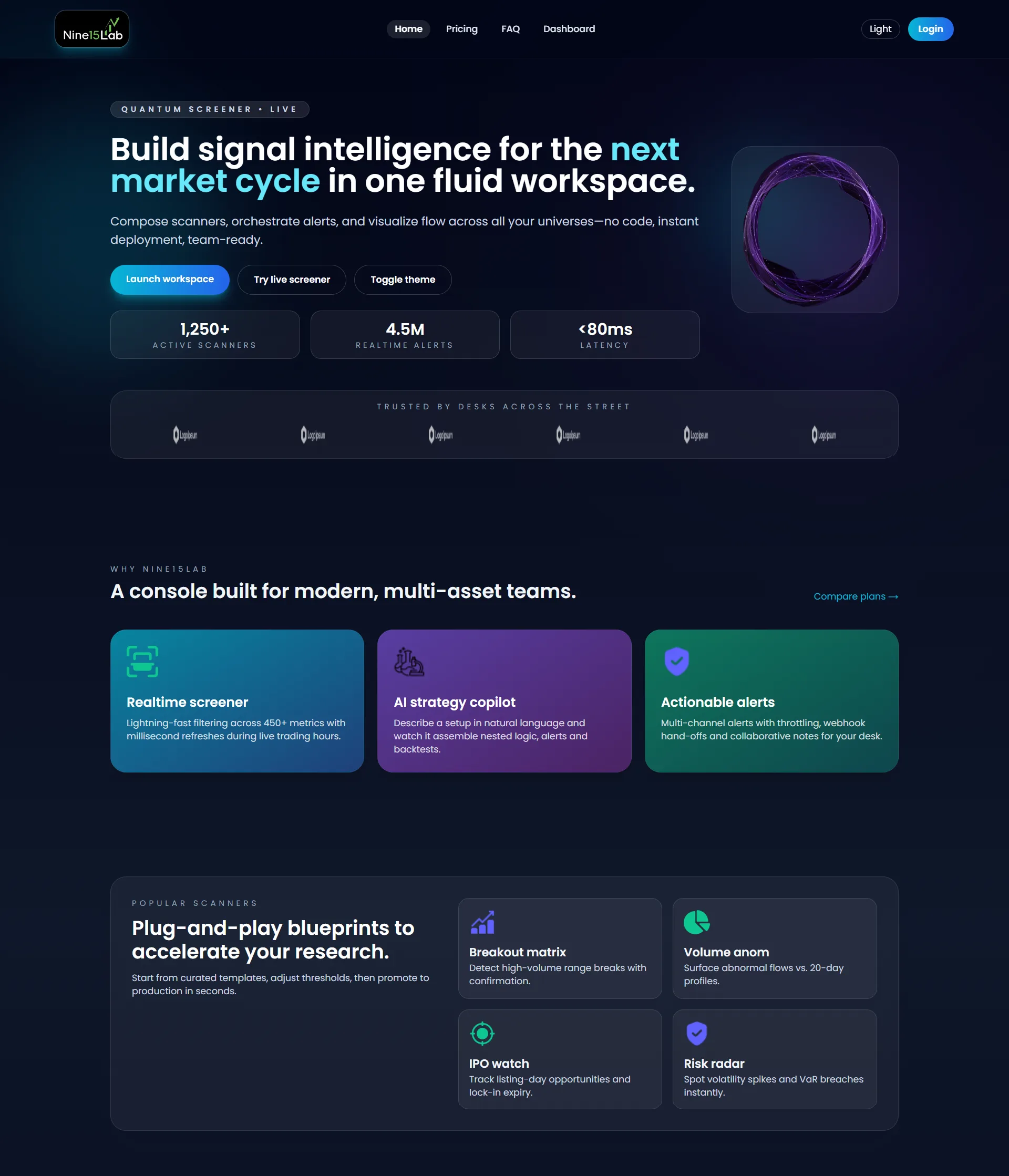
Trading and capital marketsNine15 Labs
View projectA trading workspace that organizes scanner, alert and market-flow visibility for active teams.
Read case study ↗Related Services
Engineering capabilities behind this solution.
FAQs
AI agent development buyer questions
What makes an AI agent different from a chatbot?
An agent is designed around a workflow and may retrieve approved context, use tools, maintain task state and request human approval rather than only produce conversational text.
Can iMeta connect an agent to our existing systems?
Yes, when suitable APIs or data interfaces exist. Permissions and write actions are scoped explicitly for each integration.
How do you reduce unreliable or unsupported AI responses?
The delivery approach combines grounded context, constrained tools, representative evaluations, human review paths and production monitoring. It does not claim errors can be eliminated entirely.
Can we choose a specific model provider?
Yes. Model selection can account for quality, latency, cost, deployment and data-handling requirements relevant to the approved use case.
How should an enterprise AI agent project begin?
Start with one valuable workflow that has known inputs, outputs and reviewers, then use evaluation evidence to decide whether to expand.
Plan the engagement
Ready to define scope, timeline and investment?
Share the project stage and delivery requirements. The iMeta team will review them and respond with the next practical step.