
 info@imetatech.io
 India
India  Dubai
DubaiPlatform Solution
RWA tokenization platform development built around records and ownership.
iMeta develops real-world asset tokenization platforms that connect asset records, smart-contract workflows, investor experiences and administration.
Who It Is For
RWA platforms for asset, investment and digital-infrastructure teams.
The product boundary is shaped around the asset lifecycle and the people responsible for records, investor access and platform operations.
- Asset operators and originators
Structure asset onboarding, documents, ownership events and administration inside a controlled platform.
- Investment-platform teams
Create investor-facing views and transaction workflows around the asset model approved for the business.
- Enterprises modernizing asset records
Connect existing operational data to a traceable digital ownership and reporting layer.
Business Problem
The operating challenge this solution addresses.
Tokenization only becomes a usable product when asset records, stakeholders, on-chain actions and operational controls work together.
Integration Capabilities
Connect asset workflows to identity, data and wallet systems.
Integration design follows the approved operating model; providers and legal controls are selected by the platform operator.
- Identity and onboarding providers
Integrate selected verification services into user and investor journeys without claiming provider or regulatory approval.
- Wallet or custody services
Connect approved wallet and custody paths to ownership actions and understandable transaction states.
- Asset records and document systems
Move approved property, valuation or document data into structured platform workflows.
Security & Operations
Keep sensitive asset actions controlled and traceable.
Tokenization software supports the operating process; legal enforceability, offering structure and jurisdictional compliance remain external responsibilities.
- Permissioned actions
Define who can onboard assets, approve changes, initiate transactions and review investor activity.
- Contract and record consistency
Align product states with approved smart-contract events and retain useful administrative history.
- Exception handling
Provide operational paths for failed transactions, incomplete onboarding and record discrepancies.
Solution Architecture
Connected components, designed as one platform.
The exact architecture changes with scale and integrations, but these are the core operating layers.
- 01
Asset onboarding portal
A focused workspace that brings user actions, administration and reporting together.
- 02
Ownership and transaction records
A production-ready product layer designed around clear user journeys and sustainable operations.
- 03
Smart-contract workflows
Auditable on-chain logic connected to practical product and administration flows.
- 04
Investor and admin dashboards
A clear operating view for teams to monitor activity, decisions and performance.
Delivery Capabilities
What iMeta can deliver within the solution.
Scope is selected around the existing product, operational risk and release objectives.
- Asset workflow discovery
Clarify the opportunity, user needs, constraints and success measures before delivery begins.
- Platform and contract architecture
Shape the components, data flows, integrations and technical decisions needed to scale.
- Investor experience design
Turn requirements into coherent product patterns, screens and interaction decisions.
- Wallet and identity flows
Design clear paths for users, transactions and operational teams across the product.
- Administration and reporting
Provide practical controls for users, configuration, reporting and daily operations.
- Security-focused delivery
Identify sensitive surfaces and strengthen access, transaction and deployment controls.
Technical consultation
Validate the architecture before committing to the build.
Review product scope, integrations, delivery risks and the practical route to launch with iMeta's engineering team.
Development Process
A real-world asset tokenization development process tied to the asset lifecycle.
Delivery begins with the off-chain operating model before token, contract and interface decisions are finalized.
- 01Asset and stakeholder discovery
Map asset classes, records, user roles and approval responsibilities with the operator.
- 02Platform and contract architecture
Define boundaries between documents, ownership records, smart contracts, wallets and administration.
- 03Investor and operator prototypes
Validate onboarding, asset review and transaction states before full implementation.
- 04Product and blockchain engineering
Build interfaces, services and contract-connected workflows in reviewable stages.
- 05Security and lifecycle testing
Exercise permissions, state changes, failed transactions and critical administration paths.
- 06Controlled production rollout
Release with monitoring and an agreed process for asset and platform evolution.
Product Evidence
Related work from real platform delivery.
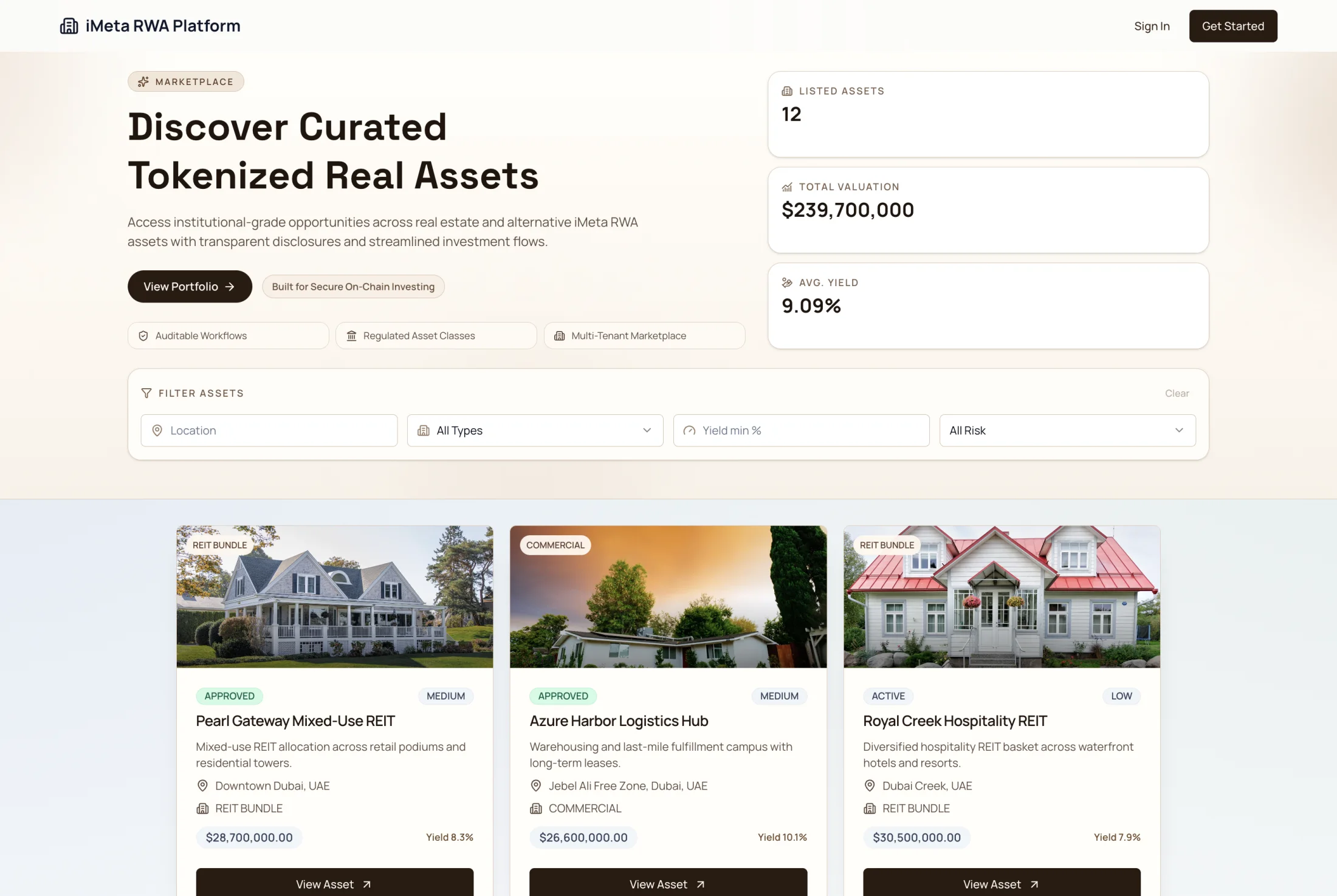
The approved RWA Platform case study and portfolio record show asset onboarding, ownership records, investor views and smart-contract-backed operations without publishing sensitive client details.
Blockchain and real-world assetsReal-world Asset Platform
View projectA platform model for asset onboarding, ownership records and investor-facing operations.
Read case study ↗
Blockchain and Web3iMeta Blockchain
View projectA reusable blockchain delivery capability for wallet flows, smart contracts and Web3 interfaces.
Read case study ↗Related Services
Engineering capabilities behind this solution.
FAQs
RWA tokenization development questions
Which asset classes can an RWA platform support?
The data model can be shaped for the asset classes approved by the operator, but ownership, offering and legal requirements must be defined with qualified advisers.
Can iMeta build investor and administrator dashboards?
Yes. Investor views, asset operations, approval paths and reporting can be included according to the platform’s roles and lifecycle.
Does iMeta provide tokenization legal or compliance advice?
No. iMeta develops the technology and configurable controls; legal structure, licensing and regulatory interpretation remain with the operator and its advisers.
Can the platform connect to custody or identity providers?
Yes, where an approved provider offers suitable integration interfaces and the operator has the required commercial arrangement.
Can an RWA MVP start with limited asset types?
Yes. A first release can focus on a defined asset lifecycle and user group before broader asset or transaction workflows are added.
Plan the engagement
Ready to define scope, timeline and investment?
Share the project stage and delivery requirements. The iMeta team will review them and respond with the next practical step.